Badges, points, and leaderboards for your community
Give your members a reason to show up, contribute, and stay.
Orgo's gamification tools let you create badges, track volunteer hours, award points, and run leaderboards. Members see their progress. Admins see what drives participation. No guesswork, just real data on what keeps people engaged.
Why gamification matters
Make contributions visible
Badges and points give members visible proof their efforts matter. Attendance, volunteering, referrals — every action gets recognized.
Match your organization's goals
Configurable point rules and tier levels let you match the system to your organization's actual priorities, not a one-size template.
Know what actually works
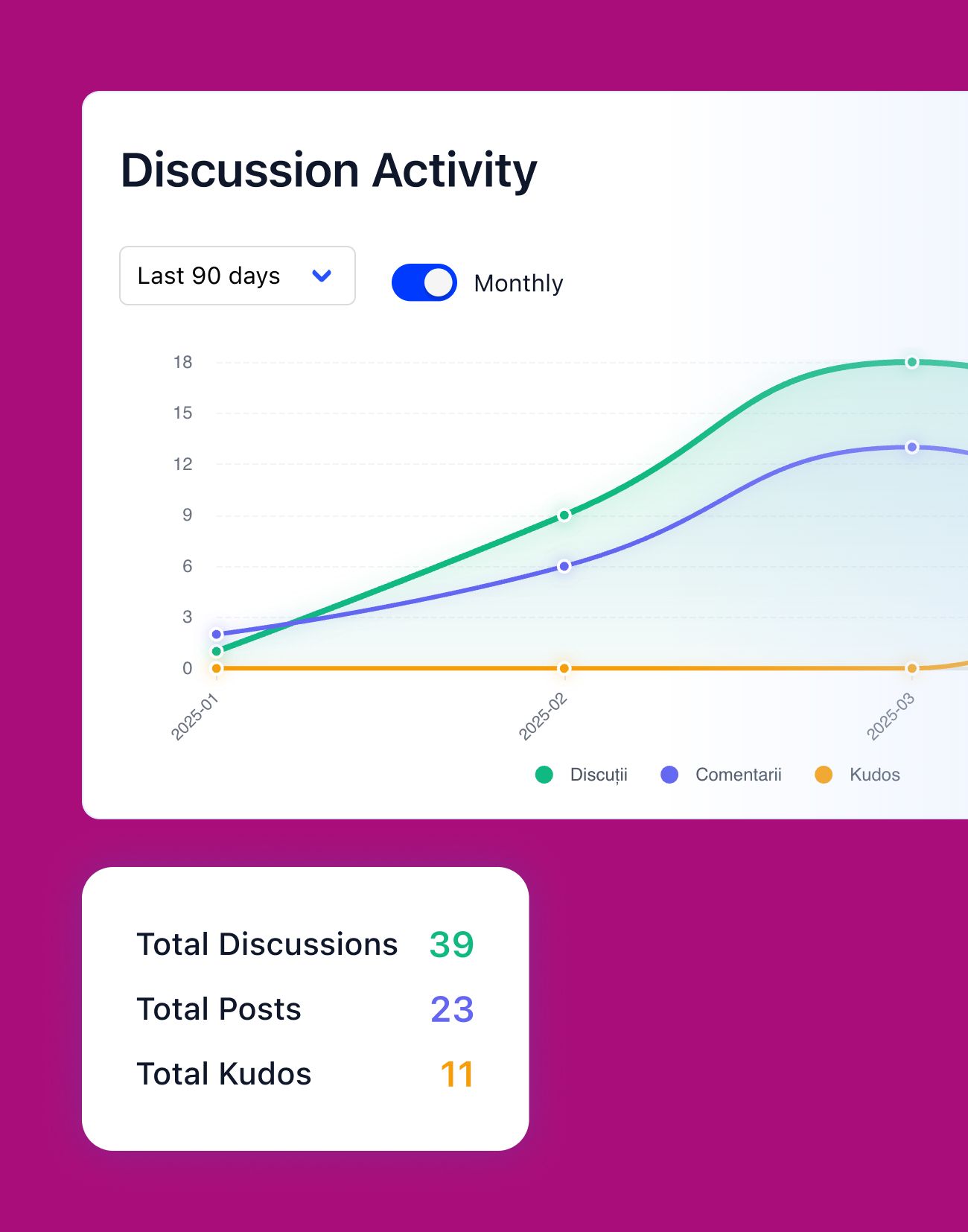
See which activities earn the most engagement. Track point distributions, badge completion rates, and leaderboard movement over time.
How gamification works in Orgo
Orgo gives you a full set of tools to recognize members and track engagement. Create badge types with categories and tiers. Assign points for purchases, event attendance, referrals, and discussion activity. Track volunteer hours with dedicated badge types. See it all come together on leaderboards and member profiles.
Badges & recognition
Create, categorize, and assign badges that reflect what your organization values.
Badge types & categories
Define badge types with custom names, icons, and categories. Group them by activity: events, volunteering, leadership, learning.
Create & assign badges
Create badges and assign them to members manually or let the system do it automatically based on rules you set.
Referral badges
Award referral badges when members bring in new people. Track who referred whom and recognize your best connectors.
Profile badge display
Earned badges show up on member profiles. Members can see their full collection, and others can see what they've achieved.

Points system
Assign point values to the actions that matter. Let the system handle the math.
Configurable point rules
Set up rules that award points for specific actions: attending events, making purchases, referring members, or posting in discussions.
Points per action
Each action type can have its own point value. A workshop attendance might be worth more than a forum post. You decide.
Transaction history
Every point transaction is logged in the BadgePointsTransaction record. Members can see exactly how they earned their score.
Points-based badges
Points feed into badges. Hit 500 points, earn a badge. The system connects point thresholds directly to badge awards.
Leaderboards
Show who's contributing the most. Friendly competition drives real participation.
Real-time rankings
Rank members by total points, badges earned, or specific activity categories. Updated as actions happen.
Time-based filtering
Filter leaderboards by time period — this month, this quarter, all time. See who's active now, not just who joined first.
Chapter leaderboards
Run leaderboards per chapter or region. Compare local group activity side by side.
Member-facing view
Members can check their own standing. Visible progress is a stronger motivator than invisible effort.
Volunteer hours
Track the hours your volunteers put in. Recognize their time with real data, not guesses.
Hour logging & approval
Members log volunteer hours against specific projects or initiatives. Admins can review and approve submitted time.
Hours tracking
The BadgeHour entity tracks hours per member, per project. Get totals by month, quarter, or year without spreadsheets.
Hours-based badges
Set up hours-based badges: 25 hours, 50 hours, 100 hours. They're awarded automatically when the threshold is reached.
Reporting by project
See total volunteer hours across your entire organization or drill down by chapter and project type.
Tier progression
Build a clear path from new member to top contributor with defined levels.
Custom tier levels
Define tiers like Bronze, Silver, Gold, or use your own naming. Each tier maps to a point threshold or badge count.
Automatic progression
Members move up tiers as they accumulate points and badges. Progress is visible on their profile.
Tier-based benefits
Tie tier levels to specific privileges or recognition within your organization. Higher tiers can mean more access or visibility.
Progress indicators
Show members exactly where they stand and what they need to reach the next level. Clear goals drive continued participation.
Gamification FAQ
People do more when their efforts are seen. Badges, points, and leaderboards make participation visible. When a member earns a badge for attending 10 events or logging 50 volunteer hours, that's concrete recognition — not a generic thank-you email.
The points system lets you attach value to specific actions: event attendance, referrals, discussion posts, purchases. Members see their score grow. They see where they rank. That visibility creates a natural feedback loop that keeps people coming back.
You also get data on what works. If your "Event Champion" badge is popular but your "Discussion Starter" badge isn't, you know where engagement is strong and where it needs attention.
Yes. You define badge types with your own names, categories, and icons. Want a "Trailblazer" badge for first-time event organizers? A "Mentor" badge for members who onboard five newcomers? You set the criteria.
Badge types support categories (volunteering, events, leadership) and tier levels (Bronze, Silver, Gold or whatever naming fits your organization). Point values per action are fully configurable — you decide if attending a workshop is worth 10 points or 50.
For multi-chapter organizations, you can maintain a consistent badge framework across the whole org while letting local groups add their own recognition on top.
Members log their volunteer hours against specific projects. Admins can optionally review and approve submitted time. The BadgeHour entity tracks everything: who volunteered, on what project, for how many hours, and when.
Hours-based badges are awarded automatically when a member crosses a threshold — 25 hours, 50 hours, 100 hours. You set the numbers. The system also calculates totals by month, quarter, or year, so you can report on volunteer impact without maintaining separate spreadsheets.
Volunteers see their own logged hours and badges on their profile. It's a clear, visible record of their contribution.
You set up point rules that fire when members take specific actions. Attend an event: +10 points. Refer a new member: +25 points. Post in a discussion: +5 points. Make a purchase: points based on the amount. The rules are configurable per action type.
Points accumulate in the member's BadgePointsTransaction log. When a member hits a point threshold tied to a badge, that badge is awarded automatically. Points also feed into tier progression and leaderboard rankings.
Members can see their point balance and transaction history. Admins can see point distributions across the organization and adjust rules as priorities change.
Leaderboards rank members by points, badge count, or activity within a specific category. They update as actions happen. You can filter by time period (this month, this quarter, all-time) and by chapter or region.
Members see their own position and can check how close they are to the next rank. For organizations with chapters, you can run per-chapter leaderboards to create friendly local competition alongside the org-wide ranking.
Leaderboards are visible to members. This isn't hidden admin data — it's a tool for members to track their own standing and see who's active in their community.
Badges integrate with events (attendance triggers point awards), newsletters (highlight top earners), chapter management (per-chapter leaderboards and badge stats), and fundraising (donation milestones earn badges).
Volunteer hours logged in Orgo feed directly into hours-based badges. Discussion posts earn points automatically. Referral badges are tied to the membership registration flow. Everything connects — no duplicate data entry, no separate tracking tools.
Earned badges display on member profiles across the platform. The BadgeUser entity links members to their badges, so achievement data is always accessible wherever a member's profile appears.
“With an organization of 8,000 members and more than 80 local groups coordinated almost exclusively by volunteers, Orgo is at the heart of our digitisation process, allowing us to focus on what we do best - learning by doing, nature, and personal development.”
Andrei Avram
President, Romanian Scouts