
Membership renewal automation replaces the annual cycle of manual spreadsheet updates, payment chasing, and status reconciliation with a system that runs without administrator involvement. For complex, multi-chapter organizations, this shift fundamentally changes who is responsible for the renewal outcome.
This article covers the full automation framework for association administrators, chapter coordinators, national secretaries, and anyone managing renewal across multiple organizational levels. It addresses notification sequences, billing configuration, self-service portals, and the metrics that tell you whether the system is working.
Why membership renewal fails in complex organizations
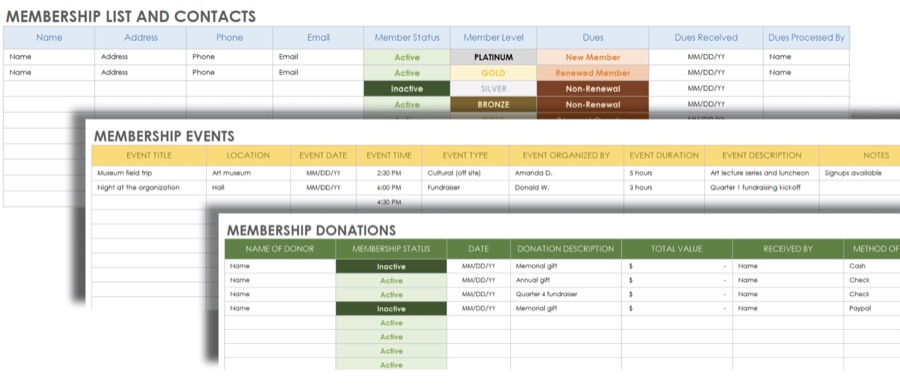
Manual renewal management creates the same failure points every year. For most organizations, it looks like this: member records in one spreadsheet, payment history in another, chapter data in a third. The problem is structural: too many manual steps across too many independent data sources.
The manual renewal trap
A typical manual renewal cycle runs like this: administrators build export lists, draft reminder emails, begin individual follow-up for non-respondents, and reconcile payments against membership records when they arrive. Each step depends on the previous one being completed accurately. When it is not, errors compound.
Members fall through the cracks when reminder emails reach outdated addresses. Lapsed statuses go undetected when database updates lag payment records. Because each chapter manages its own data independently, conflicting figures appear across the organization. More time goes toward finding and correcting errors than processing renewals.
The time cost is not just operational. Every hour spent on renewal administration is an hour not spent on member programming, governance, or community building. For organizations with thousands of members across multiple chapters, manual renewal consumes resources that belong elsewhere.
Why multi-chapter organizations have it harder
Single-chapter organizations face a manageable version of this problem. Multi-chapter organizations face a structurally different one.
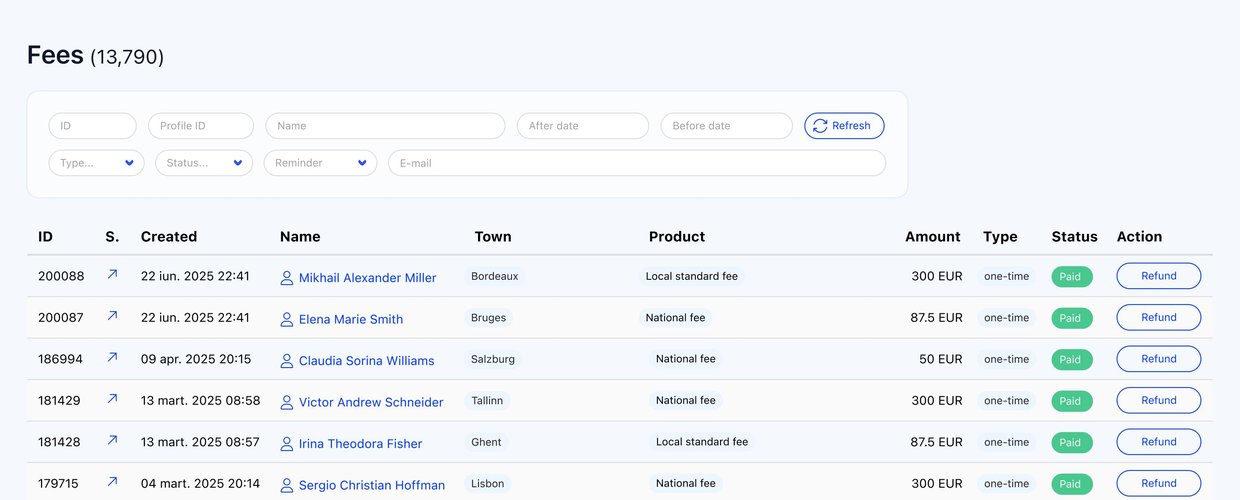
Each chapter may operate on a different renewal date or billing cycle. Fee structures vary: a member might owe a national fee, a chapter fee, and a tier-based supplement. Depending on the member's role, tenure, or geographic region, those amounts change further. Flat-fee billing tools cannot model this correctly.
Member status synchronization is the hardest problem. A member can appear active at the chapter level while flagged as lapsed at the national level, or the reverse. Without a single source of truth for member data, both records can be wrong simultaneously. Multi-chapter management at scale requires consolidated data, not federated spreadsheets.
The lapse rate problem
Lapse rate measures the percentage of eligible members who do not renew within a defined period. Its effects compound: every cohort that misses renewal reduces event attendance, dues revenue, and engagement in the year that follows.
The connection between friction and lapse rate is documented. According to MGI's annual membership benchmarking research, approximately 32-33% of non-renewing members simply forgot to renew. That 32-33% represents solvable friction. Members who forgot to renew will do so when prompted correctly and at the right time.
First-year members carry the highest lapse risk. The same research found the median first-year renewal rate is 74%, a full 10 percentage points below the 84% overall median. Without automated early-year communication, this cohort is lost systematically. Left unaddressed, the gap does not close.
What is membership renewal automation?
Renewal automation covers a set of interconnected systems that collectively manage the renewal lifecycle from 60 days before expiry to 30 days after. Understanding what each component does makes it possible to evaluate whether a platform genuinely handles renewal automation or only part of it.
Renewal automation is not just sending reminder emails
The most common misconception is that automation means a scheduled email sent 30 days before expiry. One email is one component. Status tracking, billing triggers, payment processing, credential updates, failed payment recovery, and reporting are all part of a complete renewal automation system.
Automated campaigns consistently outperform one-off manual sends on open rate, because they reach members at the moment of highest relevance rather than on the sender's schedule. Beyond reducing manual work, automation produces better engagement results.
The renewal lifecycle spans at least 90 days. It starts 60 days before expiry with the first reminder and does not end on the renewal date. For members who miss the deadline, the grace period sequence is where a significant portion of renewals are recovered.
The four layers of a complete renewal automation system
A complete system operates across four layers. Each builds on the previous one.
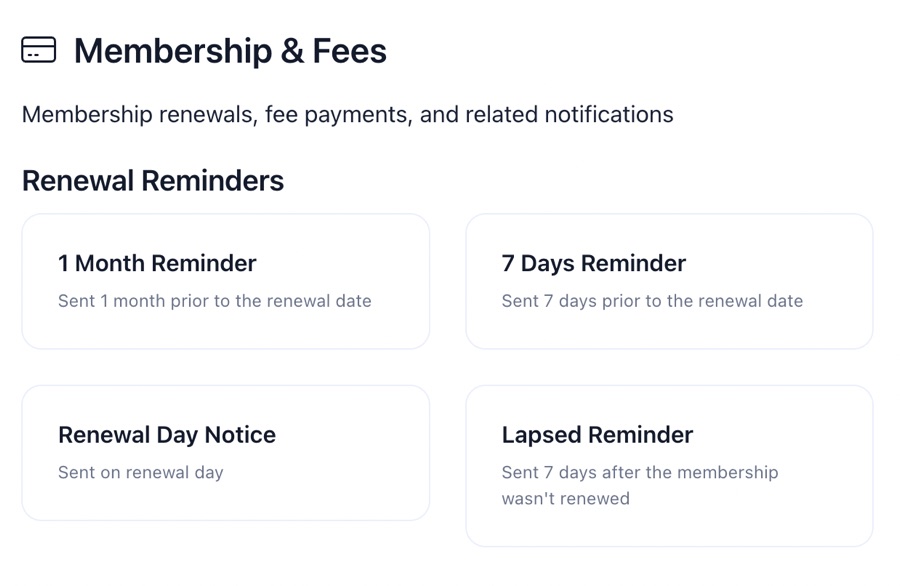
Notification automation is the foundation. Scheduled, personalized reminders reach members at defined intervals before and after expiry: 60 days, 30 days, 7 days, renewal date, and grace period. A structured renewal sequence gives members multiple opportunities to act rather than a single chance they may miss.
Billing automation handles recurring charges, billing cycle configuration, payment method management, and failed payment retries. It removes the administrator from individual payment transactions. Billing events process in real time based on each member's renewal date, without manual triggers.
Status automation updates member records from active to grace period to lapsed to suspended based on payment outcomes. These transitions happen automatically. The administrator sees the current state of every member record without needing to update it.
Credential and access automation updates membership cards, platform permissions, and benefit access based on renewal status. A member who renews gets access restored immediately. Lapsed members lose access according to the configured grace period, without requiring a manual action from any administrator.
Building a renewal notification sequence that actually works
The notification layer is the most universally applicable component of renewal automation. It applies regardless of how complex the billing or fee structure is, and it directly addresses the leading cause of avoidable lapse.
The anatomy of an effective renewal reminder sequence
Most non-renewals are moments of inaction rather than decisions to leave. A single reminder catches only members who were already ready to act. Reaching the rest requires a structured sequence with multiple touchpoints.
An effective sequence uses five touchpoints. At 60 days, the first message creates awareness and may capture early renewers. Thirty days out, a follow-up prompts action. Seven days before expiry, urgency rises without alarm. On the renewal date itself, members receive a final call for on-time renewal. Post-expiry messages during the grace period recover those who missed the deadline.
Personalization improves conversion at each touchpoint. Each message should include the member's name, chapter, membership tier, specific benefits at risk, and the renewal amount due. Personalized subject lines consistently outperform generic ones on open rate, because the message signals relevance before the member opens it. Without member-specific details, renewal reminders are easy to ignore.
What to include in each message
Clarity is the primary requirement in a renewal communication. Every message must answer three questions: what is expiring, what the member needs to do, and what happens if they do not act. Tone, design, and channel can vary; these three elements cannot.
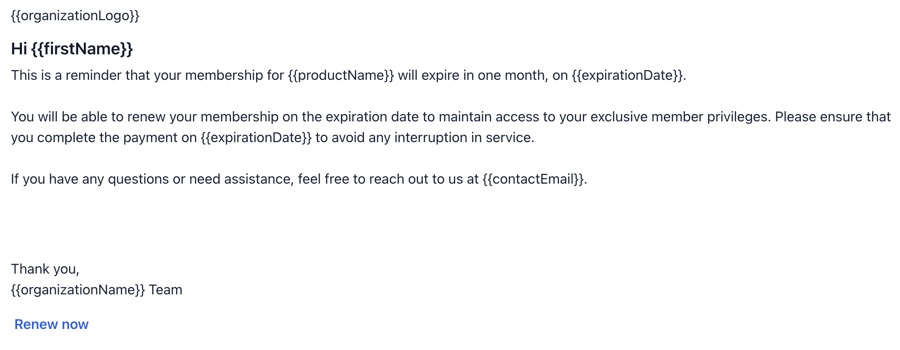
A self-service renewal link is not optional. When members must contact an administrator to renew, a portion will delay indefinitely. The link should direct them to a portal where they can initiate renewal, confirm payment details, and complete the transaction without assistance.
Tone should reflect the member's history. A long-tenured member deserves messaging that acknowledges their loyalty, while someone in their first year needs specific, concrete benefit statements about what they stand to lose. Applying the same message to both segments reduces effectiveness for both.
Handling failed payments without manual follow-up
Failed payments are not intentional non-renewals. An expired card, a flagged transaction, and a bank account closed during a job change all produce the same outcome: a missed payment. Knowing the cause matters: the recovery approach differs entirely from handling a member who actively chose not to renew.
Dunning automation handles failed payment recovery. It retries the charge at defined intervals, prompts the member to update their payment method, and escalates urgency across multiple messages before involving an administrator. According to Recurly research cited by Marketing Charts, subscription businesses risk losing 7.2% of subscribers each month due to involuntary churn from payment failures. Recovery automation cuts this directly.
A grace period is the structural tool that makes dunning effective. According to ASAE research, associations that offer 2-3 month grace periods show a higher probability of achieving renewal rates above 80%, compared to those with no grace period. The window gives the system time to recover failed payments before the member's status is changed permanently.
Membership dues automation: flexible billing for complex organizations
Billing automation is where the complexity of multi-chapter organizations diverges most sharply from what simple tools can handle. A flat annual fee is not the reality most associations operate with.
Why annual dues is too simple a model
Most membership organizations require more than a single annual fee per member. A member might owe a national fee, a regional chapter fee, and a tier-based supplement. Amounts vary further across student, family, honorary, and standard membership tiers. None of this can be modeled by a flat charge or managed reliably through a single billing account.
According to an MGI mid-year survey reported by Associations Now, 36% of associations reported decreased membership size in the first half of 2025, up from 26% at the start of the year. Billing friction contributes to this: when dues structures are complex and payment processes are manual, members who are already uncertain about value find it easy to delay renewal indefinitely.
Collecting membership dues online is the baseline requirement. Effective billing automation requires that the platform can model the organization's actual fee structure, not a simplified version of it.
Configuring billing cycles for organizational reality
Organizations run on different fiscal calendars. Some renew all members on a fixed annual date; others renew on each member's anniversary or use a rolling 12-month cycle. Each model has different implications for cash flow predictability and administrative workload.
Calendar-year billing concentrates renewals at one point, which simplifies reporting but creates a workload spike each cycle. Anniversary billing distributes renewals throughout the year, which smooths administrative effort but requires more granular tracking per member. Governance structure should drive this choice, not platform defaults.
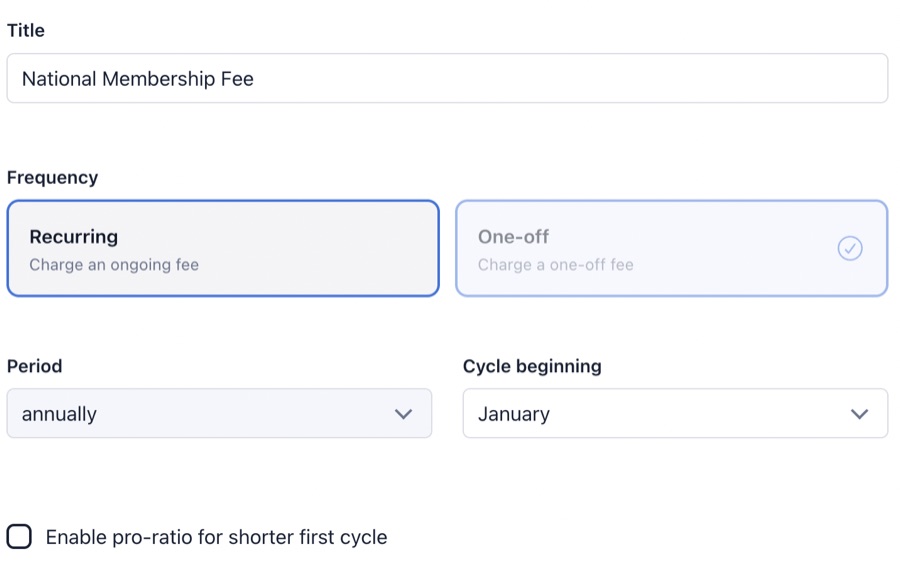
Group billing adds further complexity. Family memberships, employer-sponsored memberships, and chapter bulk enrollments require consolidated invoicing without losing individual member records. For engagement tracking, event registration, and communication history, each person in the group still needs a distinct record. Consolidating billing while collapsing individual records creates reporting blind spots.
Multi-level fee structures in practice
In a multi-chapter organization, dues flow through organizational levels. The member pays a combined fee, which the platform distributes to national and chapter accounts according to configured rules. Both levels see their revenue without manual reconciliation or inter-chapter transfers.
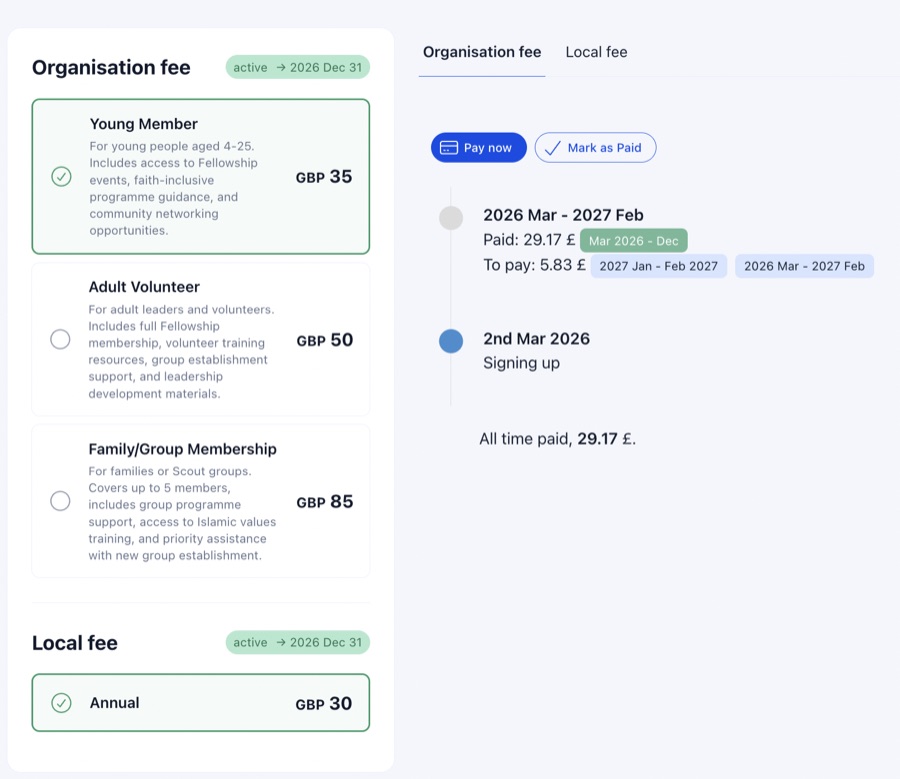
Revenue sharing configuration is the mechanism that makes this work. Each membership tier and chapter combination carries a defined distribution rule. When a member renews, the allocation executes automatically. National administrators see total renewal revenue; chapter administrators see their allocated portion. This is how local chapter management handles financial reporting at scale without creating administrative overhead.
Consolidated financial reporting across chapters depends on this architecture. Without it, national administrators rely on chapter submissions that arrive at different times and may use different categorizations. With it, renewal revenue data is available in real time, aggregated by chapter, tier, payment method, or geographic region.
Accepting payment method variety without creating administrative work
Online payment by card or direct debit should be the primary channel. It produces real-time confirmation, integrates directly into billing automation, and eliminates manual reconciliation. Through Stripe, Orgo's payment processing covers the geographic reach most international organizations require.
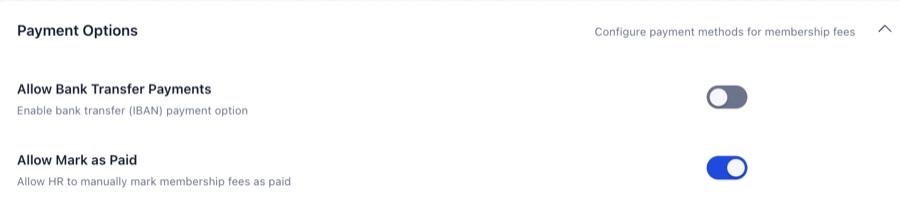
Cash and check payments still occur in some member populations, particularly in regions with lower card adoption or among older member cohorts. The key is to record these in the membership platform without breaking automated status logic. Recorded manually, a cash payment should trigger the same status update as an online payment. If the recording step is delayed or skipped, member status data becomes unreliable across the whole system.
Multi-currency dues collection requires platform support for currency conversion, VAT treatment, and local payment methods. Organizations operating across multiple countries should verify that the platform handles these natively. Processing everything in one currency and reconciling manually recreates the administrative burden that automation was meant to eliminate.
Member self-service: the most underused renewal tool
The self-service member portal is the component that most directly reduces administrator involvement in routine renewals. When members can manage their own membership status, payment details, and renewal action, renewal becomes a member-driven process rather than an administrator-driven one.
What a self-service renewal portal should include
A self-service portal gives members direct visibility and control over their membership. At minimum, it should allow members to see their current status and expiry date, initiate renewal with a saved or updated payment method, access past invoices and tax receipts, and download their membership card. These four capabilities cover the routine actions that currently generate the most administrator queries.
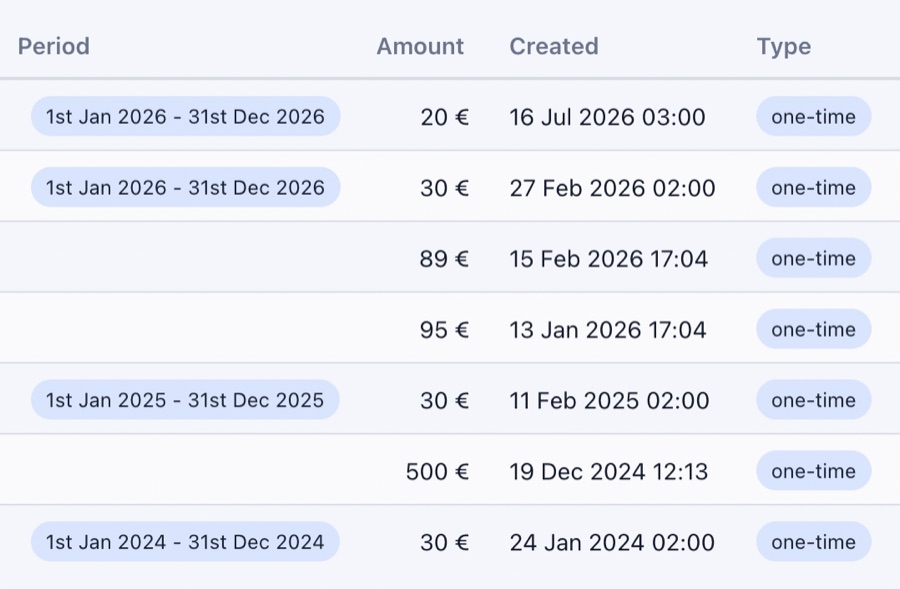
Profile and payment detail management should not require contacting the organization. Members who change banks, update addresses, or need to correct billing information should be able to do this independently. When every such action requires administrator involvement, it creates a delay and a dependency the portal is designed to remove.
Why self-service reduces lapse rates
Friction is the primary driver of avoidable lapse. When members must go through an administrator to renew, a portion will delay until they have time to deal with it, and some never circle back. Removing the intermediary removes the delay.
Automatic renewal is the most effective friction-removal tool available. Members who opt into recurring billing require no active renewal decision. Across association management platforms, automatic renewal consistently produces higher retention than opt-in renewal, because it removes the active decision entirely. The mechanism is straightforward: the member who does not need to decide to renew is the member who renews.
The 24/7 availability of a self-service portal captures renewal intent at the moment it occurs. A member who decides to renew at 10pm on a Sunday can complete it immediately. Routing renewals through office-hours administration loses that moment entirely.
Balancing self-service with organizational control
Self-service does not mean unrestricted. Tier upgrades, chapter transfers, honorary status changes, and any action that affects dues levels or access permissions typically require administrator review. Role-based access control is how the platform draws that line: some actions complete independently, others route to a workflow approval.
The audit trail from self-service actions is as important as the actions themselves. When a member updates a payment method or changes billing details, the platform should log what changed, who initiated it, and when. This record supports financial accountability and resolves disputes without requiring a manual investigation.
Members who control their own data tend to report higher satisfaction. The combination of autonomy and transparency supports both the member experience and long-term member retention.
Tracking renewal health: the metrics that matter
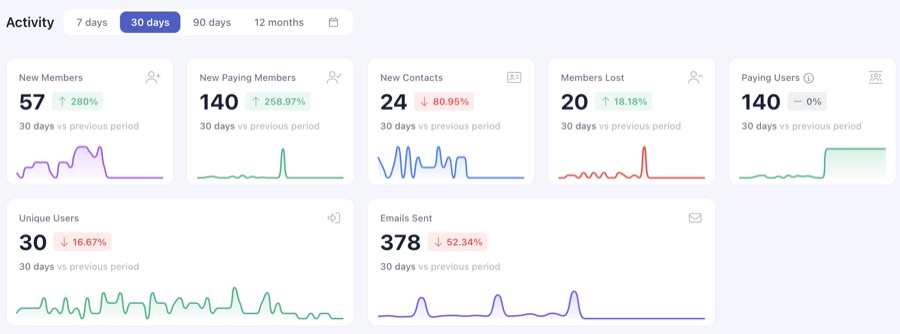
A renewal system that runs automatically still requires monitoring. The metrics below tell administrators whether the system is performing at the level the organization needs, and where to intervene when it is not.
Renewal rate: the primary metric
Renewal rate is the percentage of eligible members who renew within a defined period. The median overall rate across associations is 84%; trade and organizational associations average 85%, while individual membership associations average 78%.
Segmenting renewal rate by chapter, tier, membership cohort, and payment method reveals where the system is failing. An 87% overall renewal rate can mask a 60% renewal rate among first-year members in one chapter. That is a structural problem that will not surface in aggregate data alone.
First-year renewal deserves its own tracked metric. The median first-year renewal rate is 74%, a 10-point gap below the overall median. Without tracking this separately, a first-year retention problem can erode overall renewal rates for multiple cycles before it surfaces.
Lapse rate and churn analysis
Lapse rate and renewal rate measure the same situation from opposite angles. Both should be tracked monthly and annually. When lapse rises alongside stable recruitment, the organization is running to stand still: new members replace departed ones without net growth.
The critical distinction is between involuntary churn and voluntary churn. Involuntary churn results from payment failures, expired cards, or billing errors; voluntary churn results from an active decision not to renew. According to Paddle's subscription billing research, involuntary churn accounts for 20-40% of total churn. Billing automation and dunning sequences recover these losses directly.
Early warning indicators predict lapse risk before the renewal decision. Members who have not attended an event, opened a communication, or logged into the member portal in the 6 months before their renewal date show measurably higher lapse rates. Tracking these signals in membership management software enables proactive re-engagement before the decision to leave is made.
Revenue forecasting from renewal data
A well-structured renewal system makes dues revenue predictable. Renewal velocity, measured as how quickly members renew after receiving the first reminder, is a leading indicator of final renewal rate. Fast early response predicts a high final rate; slow early response signals a cycle that needs intervention before it closes.
Chapter-level renewal data supports allocation decisions. A chapter that consistently underperforms the overall renewal benchmark has a detectable problem: different member demographics, weaker communications, or a coordination gap between chapter and national levels. Surfacing that question is what the data does; investigating the cause belongs to leadership.
Annual dues revenue forecasting becomes straightforward when renewal rate history is reliable. Organizations can project next year's revenue before the renewal cycle begins, giving finance teams the information they need for budget planning and chapter allocation decisions.
What to look for in a membership renewal platform
The framework in this article provides the evaluation criteria directly. A platform for complex organizations needs to demonstrate capability across all four automation layers, not just one or two.
The criteria complex organizations should apply
Notification automation: Does the platform support a multi-step renewal sequence with personalization? Can each touchpoint be configured independently? Does it deliver across multiple channels?
Billing automation: Does it support multiple billing cycles and fee structures natively? Can different chapters operate on different renewal calendars while the national organization sees consolidated reporting? Does it handle failed payments and grace periods automatically, without manual triggers?
Status and access automation: Do member statuses update in real time based on payment outcomes? Are credential and access updates tied to renewal confirmation without requiring a manual step?
Self-service: Can members renew, update payment details, and access their documents independently? Does the portal reduce routine administrator queries rather than simply replicate them in a different interface?
Scalability is a separate requirement. A platform that performs well at 500 members and degrades at 50,000 creates a migration problem at exactly the point when the organization can least afford it. Verify that the platform handles current size and projected growth without architectural changes.
Retaining an existing member consistently costs less than acquiring a new one, a principle supported by ASAE research and the broader membership sector. Every percentage point of lapse rate recovered translates directly to dues revenue the organization did not have to replace through recruitment.
How Orgo approaches membership renewal for multi-chapter organizations
Orgo is a membership management platform built for organizations that have outgrown basic tools and need governance-capable infrastructure alongside operational automation.
Renewal notifications are configured at defined intervals before and after membership expiry. Administrators set the cadence once. From there, execution across email and in-platform channels runs without manual scheduling at each renewal cycle.
Billing cycles support monthly, quarterly, annual, and custom schedules. Organizations configure what matches their governance structure. Even when chapters run on different renewal calendars, national administrators see a consolidated view of renewal revenue across all units.
The multi-level dues architecture allows each chapter to process payments through a separate Stripe integration. The member pays a combined fee. According to configured distribution rules, national and chapter allocations execute automatically. No manual fund transfers or account reconciliation are required. This is how local chapter management handles dues at scale: the architecture does the distribution work, not the administrator.
The member portal gives members direct control over payment methods, transaction history, tax receipts, and membership credentials. Renewal becomes a member-initiated action. With that shift, the administrator's role moves from chasing members to reviewing system-level outcomes.
Orgo is GDPR-compliant, Stripe-powered, and supports organizations with 80+ chapters. To see how it handles renewal automation for organizations like yours, request a demo.
Membership renewal stops being a seasonal crisis when it becomes a system. Notification sequences, recurring billing, self-service portals, and multi-chapter fee management are all solved problems. Whether your current platform handles them as an integrated whole, or leaves you connecting them manually, determines the outcome.
For complex organizations, the cost of manual renewal management extends beyond administrative time. It includes the members who lapsed because the process was too confusing, the payments that failed without a recovery sequence, and the revenue gaps that make forecasting unreliable. The right platform makes renewal a background process, shifting the administrator's job from chasing members to reviewing the results.
Frequently asked questions about membership renewal automation
What is a good membership renewal rate?
The median overall renewal rate across associations is 84%, according to MGI's annual membership benchmarking research. Trade and organizational memberships average 85%, while individual memberships average 78%. Rates below 70% indicate systemic problems that require direct intervention, not incremental process adjustment.
What is a membership renewal automation sequence?
A renewal automation sequence is a scheduled series of notifications and billing triggers that guide members through renewal without manual administrator follow-up. A complete sequence includes reminders at 60 days, 30 days, 7 days, and the renewal date, followed by grace period messages after expiry. Each message is personalized and triggered automatically based on the member's expiry date.
What is a grace period in membership management?
A grace period is a defined window after a membership expiry date during which the member retains access while being prompted to renew. According to ASAE research, associations that offer 2-3 month grace periods show a higher probability of achieving renewal rates above 80%. Grace periods give the system time to recover failed payments and give members time to act without losing access immediately.
What causes membership lapse in multi-chapter organizations?
Multi-chapter organizations face lapse causes that single-chapter organizations do not: members can appear active at chapter level but lapsed nationally, fee structures are harder to synchronize, and payment failures go undetected when chapters process payments independently. Automated notification sequences and synchronized member status across organizational levels address these problems directly.