
Member retention measures an organization's ability to keep its members renewing year over year. High retention indicates that members find consistent value in their membership. Low retention points to gaps in engagement, communication, or perceived benefit. These gaps compound if left unaddressed.
Why does member retention matter?
A high retention rate gives organizations something recruitment cannot: predictability. Organizations that retain members can plan programs, sustain staff, and invest in growth with confidence. Those that struggle with retention spend disproportionate resources replacing members rather than improving what they offer.
Retained members contribute beyond their dues. Long-standing members volunteer, refer peers, attend events, and represent the organization externally. This contribution does not appear in a dues ledger but is foundational to reputation and long-term growth.
Retention also functions as a diagnostic signal. A declining retention rate reliably indicates that something in the member experience is broken, even when recruitment numbers appear healthy. Organizations that monitor retention closely catch problems before they become structural.

What does member attrition actually cost?
The financial cost of losing a member exceeds the value of lost dues. Organizations must spend on marketing, outreach, and onboarding to replace each departing member. Recruitment costs consistently exceed the cost of retaining an equivalent member through improved engagement.
Operationally, high turnover disrupts continuity. Experienced members carry institutional knowledge that new members cannot immediately replace. Projects stall, committees lose momentum, and staff redirect capacity from program delivery to administration.
The reputational cost develops more slowly but compounds over time. Prospective members notice a shrinking or unstable membership base. Word-of-mouth referrals, the most cost-effective acquisition channel, depend on members who have stayed long enough to form a genuine recommendation.

What causes members to leave?
Churn has recognizable causes. Most organizations face the same problems, even if they surface differently across membership types.
Perceived value gap. Members leave when they stop seeing a return on their dues. This happens when benefits are static, communication is infrequent, or the organization fails to demonstrate ongoing relevance to members' professional or personal lives.
Poor onboarding experience. Members who do not engage in their first 90 days rarely become long-term members. Without a clear introduction to available benefits, early connections with other members, and an early reason to return, new members disengage before habit and loyalty form.
Operational friction. Difficult renewal processes, poor communication, and unresponsive support drive avoidable churn. When renewing requires effort, undecided members will not bother. A streamlined approach to collecting membership dues removes a predictable exit point.
External circumstances. Some churn is unavoidable. Members change careers, face financial pressure, or leave an industry. Organizations cannot prevent this, but flexible membership tiers and payment options reduce how many of these members leave permanently.
How do you measure member retention?
Retention measurement starts with a small set of core metrics tracked consistently over time.
Retention rate is the primary indicator. Calculate it as: (members at end of period minus new members acquired) divided by members at start of period, multiplied by 100. For most membership organizations, a retention rate above 80% is considered healthy, though benchmarks vary by sector.
Churn rate is the inverse of retention rate. Track it monthly and annually. A rising churn rate alongside stable recruitment means the organization is running to stand still.
Engagement rate measures participation in events, forums, committees, and communications. Engaged members renew. Passive members leave. A decline in engagement rate typically precedes churn by one or two renewal cycles, giving organizations time to intervene.
Net Promoter Score (NPS) measures how likely members are to recommend the organization to peers. Members who score low are churn risks. Tracking NPS annually and following up directly with detractors converts at-risk members into retained ones.
Renewal conversion rate measures the percentage of members who renew when their membership expires. Segment this by cohort to identify whether newer or longer-standing members are less likely to continue.
What strategies improve member retention?
Retention improves when organizations treat it as an ongoing operational discipline rather than a renewal-period campaign.
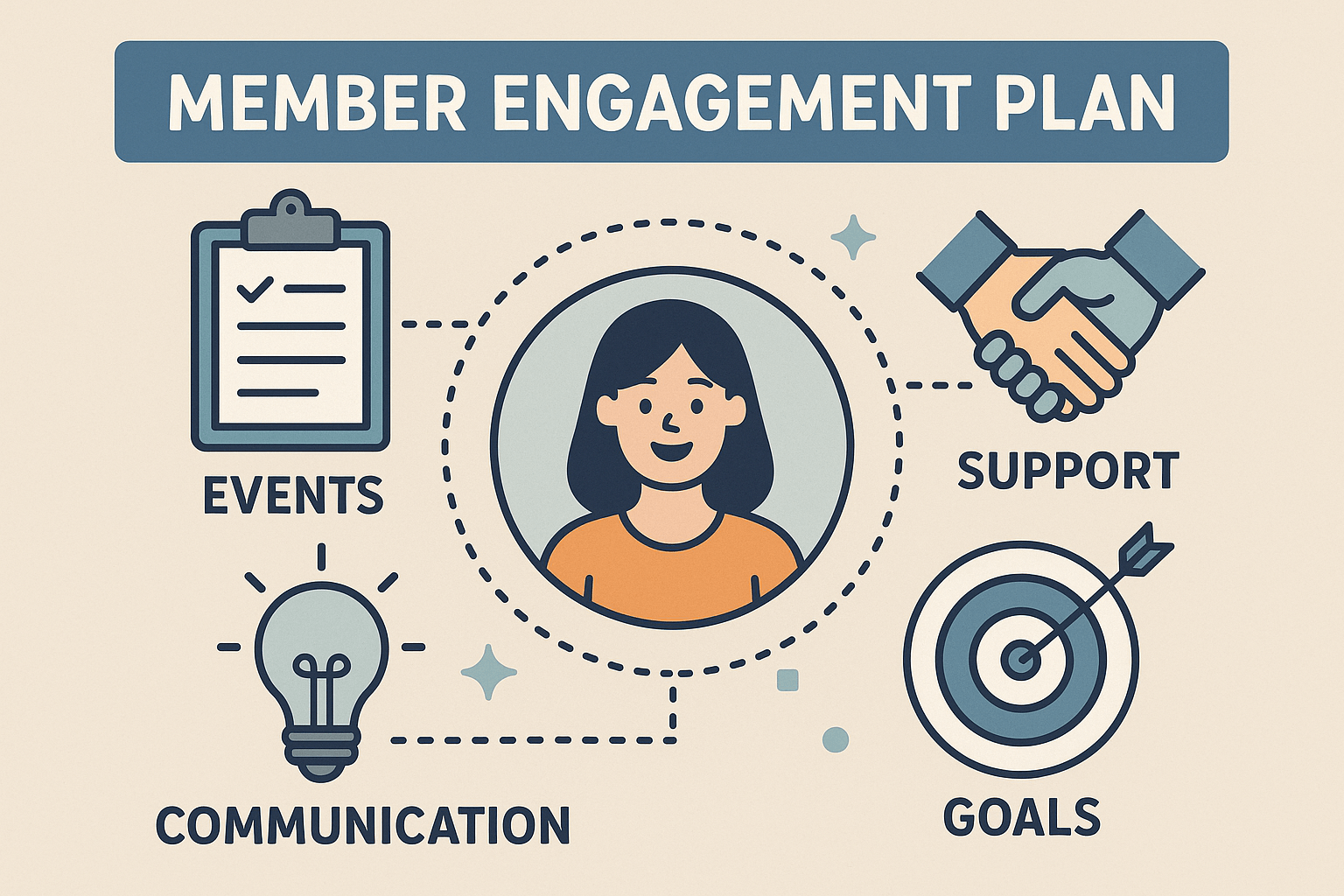
Invest in onboarding. A structured first-90-days experience significantly increases long-term membership rates. This includes a welcome sequence, early access to a key benefit, and a clear guide to available resources. Members who engage early become members who renew.
Communicate consistently. Members disengage when they hear from the organization only at renewal time. A regular cadence of relevant, segmented communication keeps the organization present between events and renewal cycles.
Segment and personalize. Members joined for different reasons. A member who joined for networking has different needs than one who joined for certification or advocacy. Segmenting the membership database and tailoring communications accordingly increases relevance and perceived value.
Track engagement and intervene early. Members who stop attending events, opening communications, or logging into member portals are churn risks months before renewal. Organizations with reliable engagement data can identify at-risk members and re-engage them before the decision to leave is made.
Create year-round touchpoints. Retention is built between renewals. Events, member spotlights, committee roles, and volunteer opportunities give members reasons to stay connected outside the renewal cycle.
Orgo supports these strategies through integrated member engagement tracking, automated communication workflows, and community analytics that surface disengagement before it becomes churn.
How do advocacy programs strengthen retention?
Advocates are the most stable segment of any membership base. They refer others, defend the organization's reputation, and rarely churn. Building advocacy deliberately provides a compounding retention benefit.
Ambassador programs formalize the advocate role. Ambassadors recruit members, represent the organization externally, and provide direct feedback to leadership. Recognition, reduced dues, or early access to benefits makes the role tangible and attractive.
Referral incentives encourage members to recruit from their networks. Members acquired through peer referral retain at higher rates than those acquired through paid channels, because they joined on the recommendation of someone they trust.
Recognition programs signal to the broader membership that long-term engagement is valued. Publicly acknowledging membership milestones, consistent attendance, and committee contributions reinforces loyalty across the membership base and motivates others to stay involved.
Frequently asked questions
What is a good member retention rate?
Retention benchmarks vary by sector. Professional and trade associations typically aim for 80-90% annual retention. Rates below 70% indicate systemic problems with value delivery or member experience that require direct intervention rather than incremental adjustment.
When should organizations start retention efforts?
From the first day of a member's tenure. Retention is determined primarily by the onboarding experience. Members who do not engage in their first 90 days rarely become long-term members. Retention programs should activate within the first week of membership, not at renewal time.
What is the relationship between engagement and retention?
Engagement predicts retention more reliably than any other single metric. Members who attend events, participate in forums, and actively use member benefits renew at significantly higher rates than passive members. Tracking engagement continuously gives organizations advance warning of churn risk before renewal decisions are made.
How does Orgo support member retention?
Orgo tracks member engagement across events, communications, and platform activity. Organizations use this data to identify at-risk members, automate re-engagement workflows, and measure the impact of retention programs over time. Member data across chapters, tiers, and lifecycle stages is managed from a single membership management dashboard, giving leadership the visibility needed to act before members disengage.